Checkers - Online & Offline
- 4.5
- Rating
- 10.00M
- Installs
- Free
- Price
 Analysis by App-foxy
I spent time with Checkers - Online & Offline as a quick board game for short breaks and slower evenings, and its appeal became clear almost immediately: it takes a familiar game, puts it on a phone, and makes starting a match nearly effortless. Developed by GamoVation, this free board game is aimed at Everyone, runs on Android devices using version 6.0 or later, and has grown into a widely played choice with over 10 million installs. That reach makes sense, because checkers needs very little explanation before the first move.
What matters here is not a large collection of unrelated activities or a complicated progression system. The attraction is the match itself: choosing a move, reading the opponent’s response, and trying to turn a small positional advantage into a win. I found it easy to pick up, but not so shallow that the first few games revealed everything. The experience works best when I treat each match as a small thinking exercise rather than expecting a long campaign or a stream of dramatic rewards.
How the first matches create useful goals
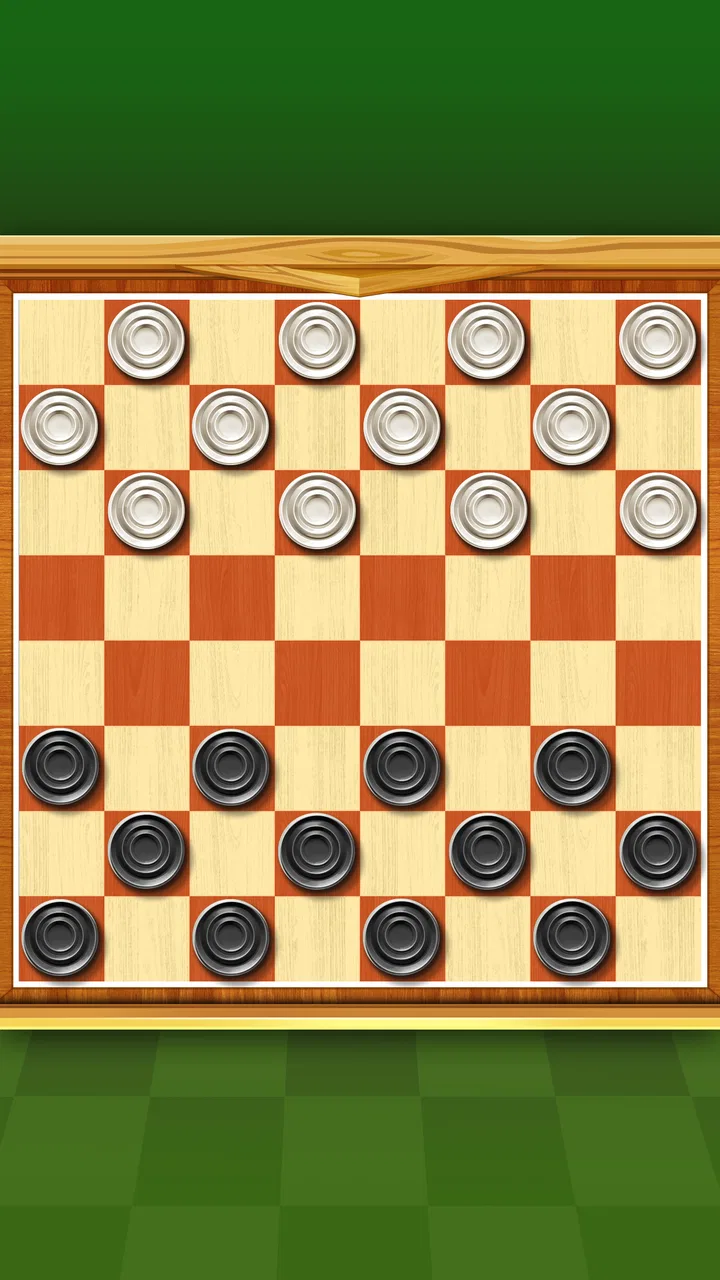
The earliest goal is refreshingly simple: understand the board, make legal moves, and complete a game. That sounds obvious, but it is exactly why this version is approachable. Someone who has not played checkers in years can return without studying a manual, while a regular player can begin testing decisions almost at once. The rules provide the structure, and the phone format removes the need to find a physical board or another person sitting nearby.
You May Also Like

 Blood Strike: 2.5 Anniversary
Blood Strike’s Loadouts Turn Every Drop Into a Tactical Gamble
A close look at Blood Strike’s custom loadouts: how fast access to signature weapons reshapes its battle royale rhythm, rewards preparation, and narrows the gap between fights.

 Pandora - Music & Podcasts
Pandora’s Music Is Easy to Start, but Harder to Recover
Pandora’s strength is its low-effort path from a seed to a station. Its weak spot is how much confidence it asks you to place in connection, setup, and quiet recovery.

 8 Ball Pool
 Is Built on Rivalries, Rematches, and Routine
A close look at the rivalries, rematches, shared routines, and unanswered safety questions that turn a quick pool match into a persistent mobile community.

 Samsung Music
’s Quiet Strength Is Playing What You Already Own
Its reach comes less from spectacle than from dependable access to a personal library. That simplicity is both the app’s strongest retention engine and its ceiling.

 AccuWeather: Weather Radar
AccuWeather Review: A Quick, Clear Forecast for Everyday Decisions
For everyday plans, the best forecast is the one you can understand quickly. AccuWeather makes rain timing, radar, and local conditions easy to act on, with a few trade-offs.

 Hill Climb Racing
Why Hill Climb Racing Still Turns Crashes Into One More Run
A tiny car, a bumpy hill and one more upgrade: Hill Climb Racing keeps resurfacing because its simple chaos makes every near-miss feel personal.
More From Our News Desk
View All News


My first useful target was not winning every match. It was avoiding careless exchanges. Checkers quickly teaches that moving a piece forward is not automatically progress. A move can open a capture, block another piece, or leave a group vulnerable on the next turn. That gives the game an early learning loop: play, notice the mistake, and try to recognize the same pattern before committing again.
The most satisfying early milestone is reaching the far side and turning a piece into a king. That moment gives a match a clear sense of direction without requiring an elaborate reward track. I started looking at the board in two stages: first, protect the pieces that can advance safely; then, create enough pressure that one of them has a realistic route forward. The promotion goal is easy to understand, but achieving it consistently takes more care than a beginner may expect.
There is also a practical goal for people using the game in small gaps during the day: finish a thoughtful match without rushing. A short session can still feel complete because a board game has a natural beginning, middle, and end. I could play while waiting for an appointment or during a quiet break, then stop after the current match instead of being pulled into an endless feed. That makes the app more suitable for deliberate play than many mobile games built around constant interruption.
One tip helped me improve faster than simply playing repeated games: after losing, I replayed the final few turns mentally and asked which earlier move made the ending unavoidable. In checkers, the visible mistake is often not the real mistake. A piece may be trapped because of a decision several turns earlier. Treating each loss as a short puzzle review turns ordinary matches into a more useful practice routine.
Progress you can actually feel during play
The progress signals here are mainly personal and strategic rather than a large collection of unlocks. I noticed improvement when I stopped judging a move only by whether it captured something. A capture can be tempting while forcing the remaining pieces into a bad formation. Learning to value safe positioning, available replies, and future exchanges gave me a stronger sense of advancement than any decorative reward would have done.
That style of progression will suit players who enjoy mastering a ruleset. It may disappoint anyone looking for characters, equipment, story chapters, or a visible stream of new content. The board remains the board, and the reason to continue is the chance to make better decisions. The game’s long-term interest therefore depends heavily on whether the player enjoys analyzing mistakes and adapting to opponents.
A useful self-made progression plan is to focus on one skill per session. I might spend several games protecting the back row, then concentrate on avoiding forced captures, and later work on creating exchanges that leave a clear path to promotion. This keeps the experience from becoming a blur of wins and losses. It also gives beginners a way to measure progress when the app itself is not presenting a traditional lesson plan.
Another non-obvious strength is how the board exposes the consequences of impatience. In many mobile games, fast input is rewarded because the action keeps moving. Here, pausing for a few seconds can be the better choice. I learned to scan every possible capture before moving, then check what my opponent could capture in return. That simple two-step habit is more valuable than trying to memorize a long list of openings.
The free entry point also lowers the barrier to experimenting. I can try different approaches without committing to a paid game first. In-app purchases range from $0.99 to $99.99 per item, so I would still advise checking the purchase flow carefully if a child is using the device or if you prefer a strictly no-spend setup. The game is free to start, but “free” does not mean every optional purchase is equally small.
Difficulty, mistakes, and the shape of a match
Checkers has a naturally readable difficulty curve because the rules stay stable while the quality of decisions improves. At the beginning, the challenge is remembering movement and capture possibilities. Soon after, the harder problem is seeing what a move permits several turns later. That transition is gentle enough for casual players, but it creates a real ceiling for anyone who wants to become consistently strong.
I found the game most engaging when I stopped expecting every match to feel equally difficult. Some games are decided by an early error and become exercises in damage control. Others remain balanced until the end, where a single promotion or forced sequence changes everything. That variation gives the pacing a natural rhythm, although a player who wants every round to feel like a perfectly matched contest may find uneven games frustrating.
The best way to handle a bad position is to keep looking for practical chances instead of resigning mentally. A crowded board can hide tactical opportunities, and an opponent who appears ahead can still make a careless move. I began treating losing positions as defensive challenges: preserve mobility, avoid unnecessary exchanges, and make the other side prove the advantage. This approach made matches more interesting even when victory was unlikely.
There is a trade-off between speed and learning. Fast moves make the game feel light and convenient, especially during a short break, but they reinforce habits that are difficult to correct later. Slower play is better when I am trying to improve. I recommend using quick sessions for casual entertainment and reserving a quieter session for deliberate analysis. Mixing those purposes without noticing can make the game feel either too simple or unnecessarily demanding.
Compared with a physical checkerboard, the mobile version is much easier to carry and start, but it does not provide the same social atmosphere as sitting across from another person. Compared with a general board-game collection, it is more focused and less distracting, yet it also offers less variety. And compared with a dedicated strategy title with a campaign, it is more accessible but less structured. Those differences matter: this is a good choice when I want checkers specifically, not when I want a broad library or a story-driven challenge.
What keeps the game in rotation—and what can push it away
The strongest retention pressure comes from the desire to correct the last mistake. A close loss can make me want one more match because the next game feels like a chance to apply the lesson immediately. That is healthy motivation when I am choosing to improve, but it can also create a repetitive loop if every session becomes an attempt to erase frustration. I get more value by setting a small stopping point, such as finishing a match and identifying one decision to change next time.
The game’s pacing works particularly well for people who prefer contained sessions. There is no need to build a large collection before the core activity becomes enjoyable. I can open it, play, and leave after a completed match. That makes it a practical alternative to mobile games that require daily tasks or extended preparation before their interesting parts appear.
At the same time, players who depend on constant unlocks may lose interest. The board-game format does not automatically provide a sense of accumulation. If your favorite mobile experiences are built around new abilities, expanding maps, or frequent content drops, this may feel static. Its lasting appeal is closer to practicing chess tactics, solving familiar puzzles, or returning to a favorite card game: repetition is the content, and mastery is the reward.
I also would not choose it as my first option for a group looking for a party experience. Checkers is naturally a focused two-player activity, and the appeal comes from the quality of decisions rather than conversation or spectacle. For a family evening around a table, a physical set may be warmer. For a solo player or someone who wants a convenient digital board, the phone version is much more practical.
The large player response suggests that the basic concept connects with a broad audience: the game holds a 4.5 average from around 252 thousand ratings, alongside roughly 1.3 thousand written reviews. I read those figures less as proof that everyone will enjoy it and more as confirmation that the straightforward format has staying power. A familiar game can remain useful when the controls stay out of the way and starting a round requires little effort.
Who should install it and who should look elsewhere
I would recommend this to someone who wants a recognizable board game for short, repeatable sessions. It is especially suitable for beginners returning to checkers, casual players who dislike complicated interfaces, and experienced players who enjoy refining decisions one match at a time. The Everyone age rating also makes the subject matter broadly approachable, though I would still supervise purchases on a shared family device.
It is less suitable for a player who needs a strong narrative reason to continue, a large progression tree, or a constant supply of new mechanics. It may also be the wrong choice if your main goal is social interaction around a physical table. In those cases, a boxed checker set, a broader board-game app, or a more structured strategy game could serve you better.
Before installing, I would ask myself one practical question: do I enjoy replaying the same ruleset to improve? If the answer is yes, the simplicity becomes a strength. If the answer is no, the lack of a broader campaign may become noticeable quickly. The game does not need to disguise checkers as something else, and that honesty is part of its appeal, but it also means the fit depends strongly on your expectations.
My verdict on the progression and pacing
GamoVation’s game succeeds because its early goals are immediate, its difficulty grows through decision-making, and its matches provide a natural reason to return. I do not see a need for a complicated unlock structure when promotion, tactical exchanges, and better defensive play already create meaningful milestones. The progression is mostly inside the player, which is rewarding for thoughtful users but less compelling for anyone seeking visible prizes.
Version 2.9.2 keeps the product positioned as a focused, free checkers experience rather than an oversized board-game platform. I appreciate that clarity. The main friction is not learning the game; it is deciding whether repeated matches are enough to sustain your interest and being mindful of optional in-app purchases. Those are manageable concerns, but they should shape your expectations before you begin.
After using it, I would recommend Checkers - Online & Offline as a dependable choice for quick strategic play, especially when I want something familiar that still rewards patience. It is not the right pick for every mobile gamer, and it will not replace the atmosphere of a real board between friends. Still, when I want a compact match, a clear objective, and a reason to rethink my last move, it delivers a focused experience without making the basics feel complicated.
FAQs for Checkers - Online & Offline
01Is Checkers - Online & Offline free to download and play?
Yes, Checkers - Online & Offline is free to download and play on both Android and iOS devices. While the core features of the game are available at no cost, there may be optional in-app purchases for customization options or to remove ads, enhancing the overall gaming experience.
02Can I play Checkers - Online & Offline without an internet connection?
Absolutely! Checkers - Online & Offline offers both online and offline modes. You can enjoy playing against the computer or a local opponent without needing an internet connection. This makes it perfect for travel or when you're in areas with limited connectivity.
03Does Checkers - Online & Offline have multiplayer features?
Yes, the game includes robust multiplayer features. You can challenge friends or other players worldwide in real-time matches. The online matchmaking system ensures you find opponents of similar skill levels, providing a challenging and engaging experience.
04What customization options are available in Checkers - Online & Offline?
Checkers - Online & Offline allows players to customize the appearance of the game. You can choose from various board designs and piece styles. Some customization options may require in-app purchases, but there are plenty of free choices to enhance your gameplay visually.
05Is Checkers - Online & Offline suitable for beginners?
Definitely, the game is designed to be accessible for beginners while still providing depth for experienced players. It includes tutorial modes and adjustable difficulty settings, allowing new players to learn the game at their own pace and gradually increase the challenge as they improve.
Pros
- User-friendly interface for beginners.
- Supports both online and offline play.
- Customizable board themes.
- Engaging AI opponents.
- Cross-platform multiplayer capability.
Cons
- Occasional connectivity issues online.
- Limited board variations.
- Ads can be intrusive.
- No tutorial for new players.
- In-app purchases can be pricey.

Checkers - Online & Offline
Gallery